
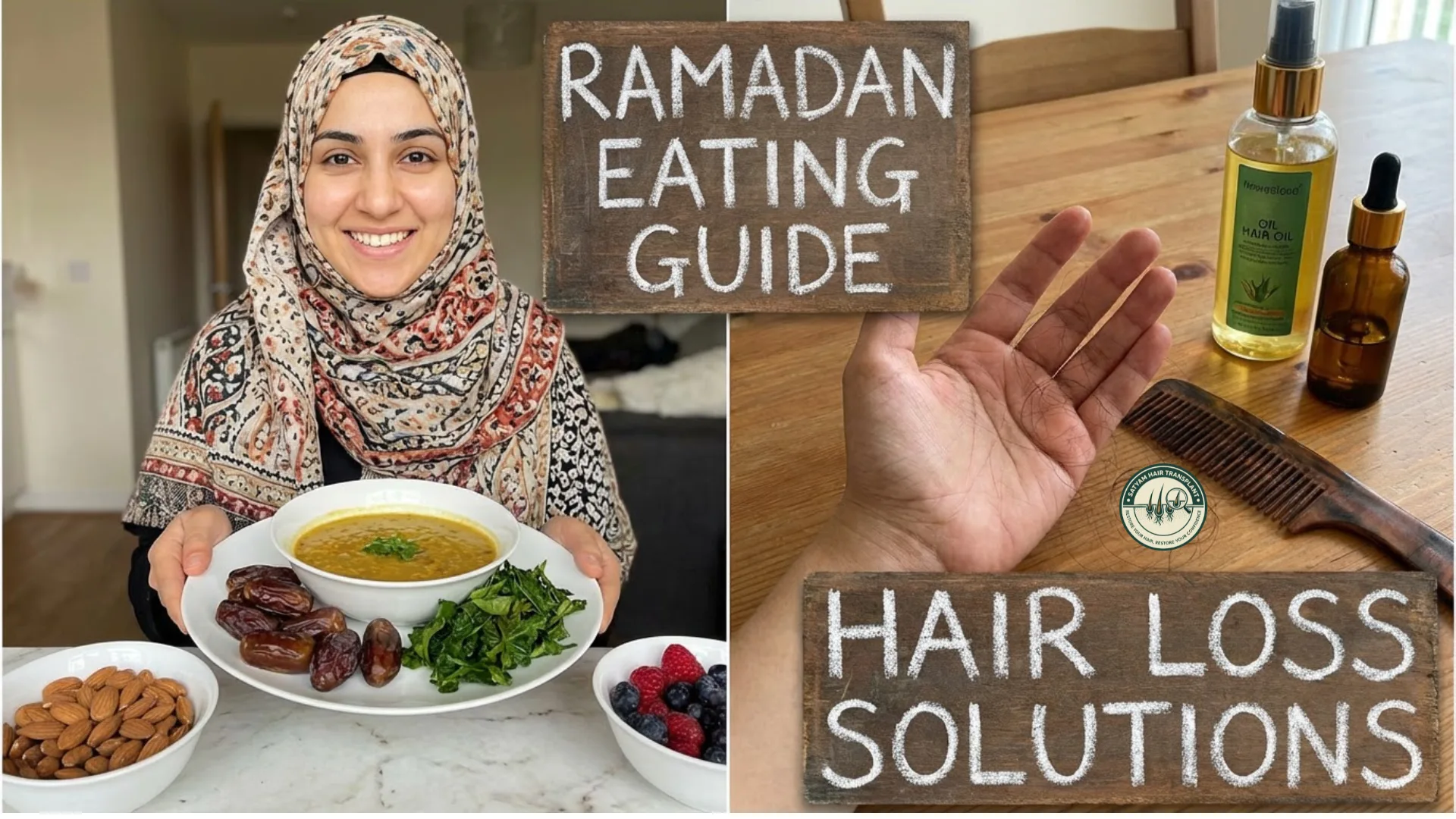
Ramadan is a special month focused on self-discipline and spiritual growth. For people dealing with hair loss, this time can be tough because fasting for long hours can impact nutrition and hydration. Eating the right foods is very important for keeping hair healthy. The good news is that by choosing the right foods, you can help your hair grow while also staying healthy during Ramadan.
Why Diet Matters for Hair Loss During Ramadan
Hair follicles need constant nourishment to remain strong. Poor nutrition during fasting can lead to:
- Increased hair fall
- Weak hair roots
- Slower regrowth
- Low energy levels
That’s why maintaining a balanced Sehri and Iftar routine is essential.
Healthy Lifestyle Rule During Ramadan
The first and most important rule is discipline. Ramadan is not about overeating or staying awake all night. To maintain good health and support hair growth:
- Sleep early after night prayers
- Avoid late-night junk food
- Maintain a fixed routine
Proper sleep helps regulate hormones that directly impact hair growth.
Ideal Sehri Diet for Hair Growth
Sehri should include foods that digest slowly and provide steady energy throughout the day.
1. Start with Hydration
Begin Sehri with:
- One glass of water
- One glass of fresh juice made from amla, beetroot, and carrot
This combination helps improve blood circulation and strengthens hair roots.
2. Include Protein-Rich Foods
Protein is essential for hair growth.
Add to your Sehri:
- Two eggs
- Or plant-based protein alternatives
Protein helps maintain hair strength and reduces hair fall.
3. Eat Seasonal Fruits
Consume 200–300 grams of seasonal fruits.
Fruits provide:
- Vitamins
- Antioxidants
- Natural hydration
These nutrients support scalp health and prevent dryness.
4. Add Nuts and Healthy Fats
Healthy fats nourish hair follicles.
Include:
- 5–10 soaked almonds
- Soaked walnuts
- One date
These foods provide omega fatty acids that promote stronger hair.
5. Balanced Main Meal
Your main Sehri meal should include complex carbohydrates and protein.
Good options include:
- Porridge, oats, rice, or whole-grain roti
- 200 grams of vegetables
- 100 grams of paneer, chicken, or sprouts
This balanced meal provides sustained energy and supports hair regrowth.
6. Drink Extra Water
After completing your meal, drink two additional glasses of water after 30 minutes.
Proper hydration is crucial because dehydration can trigger hair shedding.
Foods to Avoid During Ramadan
Certain foods can worsen hair fall during fasting.
Avoid Caffeine
Tea, coffee, and soft drinks contain caffeine that:
- Causes dehydration
- Reduces nutrient absorption
- Weakens hair roots
Avoid Fried and Junk Foods
Stay away from:
- Deep-fried snacks
- Sugary desserts
- Heavy oily foods
These foods increase thirst, stress the body, and may worsen hair loss.
Why Nutrition is Important After Hair Transplant
Patients who have undergone a Hair Transplant in Ludhiana must be extra careful with diet during Ramadan.
A qualified Hair Transplant Surgeon always recommends:
- High-protein meals
- Adequate hydration
- Balanced vitamins
This ensures faster healing and better hair growth results.
Conclusion
Ramadan is a great time to focus on both your spirit and your body. Eating the right foods can help you keep your energy up, protect your hair, and avoid losing more of it. Having a good daily routine, a balanced diet, and drinking enough water can really help your hair grow back. If you are facing serious hair loss, it’s a good idea to talk to a trusted hair transplant doctor for advice that’s right for you.
No, but poor diet, dehydration, and lack of sleep during Ramadan can increase hair fall.
Eat protein-rich foods like eggs, nuts, paneer, chicken, fruits, and vegetables.
Drink 8–10 glasses of water between Iftar and Sehri to keep hair roots healthy.
Avoid caffeine because it causes dehydration and can worsen hair loss.
Yes, proper nutrition and hydration are essential for healing and better results after a Hair Transplant under a qualified Hair Transplant Surgeon.